

The way we do SEO is changing very fast. Today, search engines are not just showing blue links. They are using AI to generate answers directly on the search page. If we want to grow our website in 2026, we must understand AI SEO Optimization.
In this blog, I will explain in simple words:
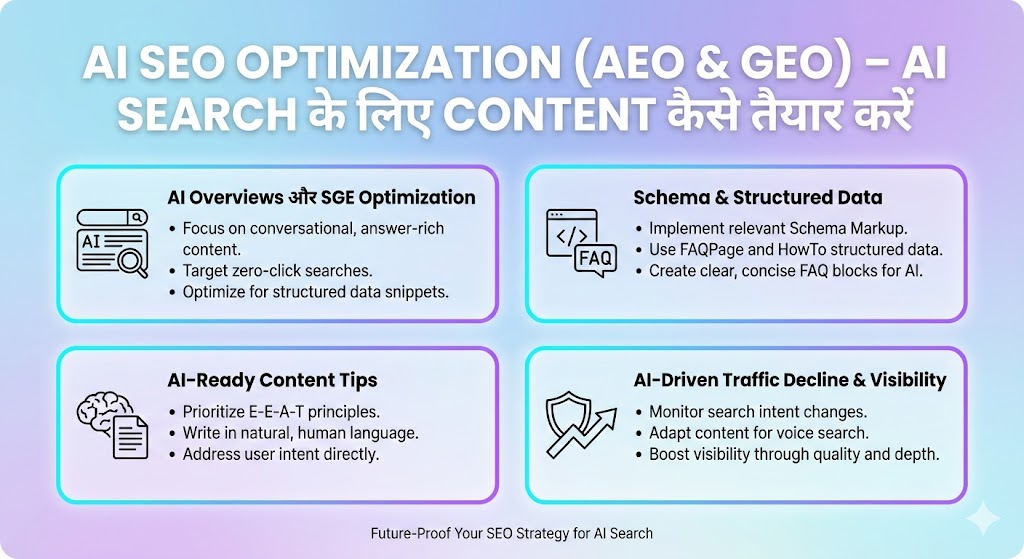
- What is AEO and GEO
- How to optimize for AI Overviews and Search Generative Experience (SGE)
- How to use schema, structured data, and FAQ blocks
- How to avoid AI traffic decline and increase visibility
Let’s get started.
What is AI SEO Optimization (AEO & GEO)?
AI SEO Optimization means preparing your website content for AI-powered search engines.
There are two important terms:
1. AEO – Answer Engine Optimization
AEO means optimizing your content so that AI tools can pick your answers and show them directly in search results.
2. GEO – Generative Engine Optimization
GEO focuses on optimizing your content for generative AI systems like AI Overviews and SGE that create summarized answers using multiple websites.
If we want our website to stay visible, we must focus on AI SEO Optimization, not just traditional SEO.
How AI Overviews and SGE Are Changing Search
Search engines now show AI-generated summaries at the top. These are called AI Overviews and Search Generative Experience (SGE).
Instead of users clicking many links, AI gives a short answer instantly.
So what does this mean for us?
- Less clicks for basic information
- More competition for featured answers
- Higher need for clear, structured content
This is why AI SEO Optimization is very important today.
How to Optimize for AI Overviews and SGE
If you want your website to appear in AI-generated answers, follow these steps:
1. Write Clear and Direct Answers
AI tools prefer simple, direct, and helpful answers.
Instead of writing long confusing paragraphs, we should:
- Answer the main question in the first 2–3 lines
- Use simple English
- Avoid keyword stuffing
This improves AI SEO Optimization performance.
2. Use Proper Headings (H1, H2, H3)
Structure matters a lot.
Use:
- One H1 (main title)
- Clear H2 and H3 subheadings
- Bullet points for easy reading
AI systems scan content structure. Good formatting improves AI SEO Optimization and helps AI understand your page better.
Schema and Structured Data for AI SEO Optimization
Schema markup is very powerful in AI search.
When we use structured data, we help search engines understand:
- What the page is about
- Who wrote it
- FAQs
- Reviews
- Services
Some important schema types for AI SEO Optimization:
- FAQ Schema
- Article Schema
- How-to Schema
- Organization Schema
Structured data increases the chances of appearing in AI Overviews and rich results.
Why FAQ Blocks Are Important
FAQ sections are extremely helpful for AI SEO Optimization.
Why?
Because AI tools love short question-and-answer formats.
Add 4–6 FAQs at the end of your blog:
- What is AI SEO Optimization?
- How does AEO work?
- How to rank in AI Overviews?
- What is GEO in SEO?
Write short, clear answers under each question.
This improves visibility in SGE and also increases your chance of getting featured snippets.
AI-Ready Content Tips
If we want long-term growth, we must create AI-ready content.
Here is what I personally recommend:
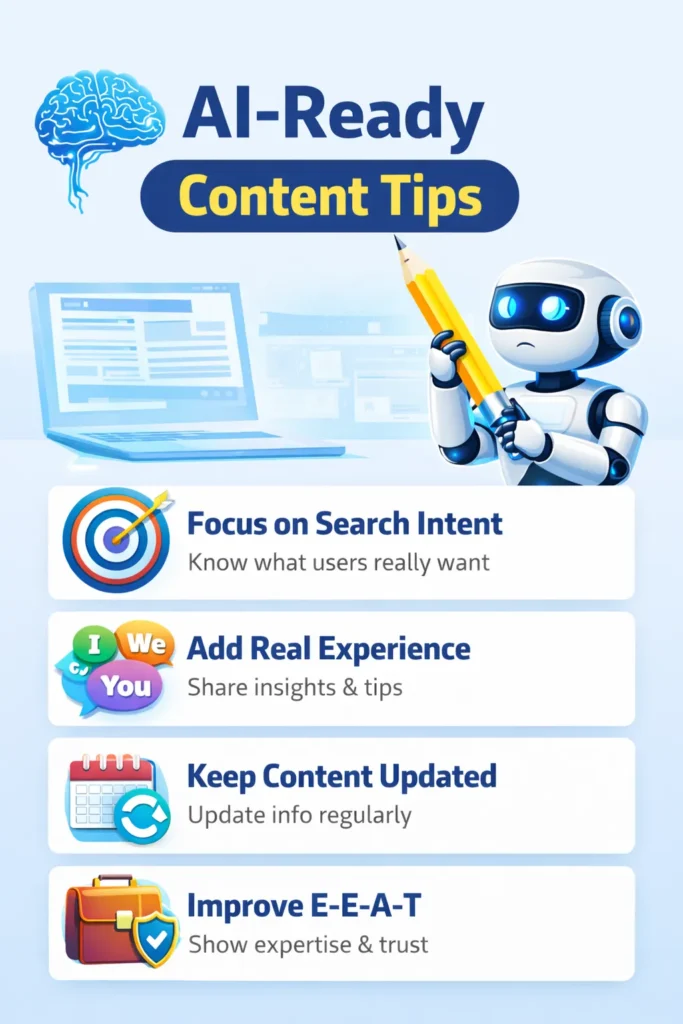
1. Focus on Search Intent
Understand what users really want. Are they looking for information, services, or comparison?
2. Add Real Experience
Use “I”, “we”, and “you”. Share insights and practical tips. AI prefers authentic and helpful content.
3. Keep Content Updated
AI prefers fresh content. Update statistics and examples regularly.
4. Improve E-E-A-T
Show expertise, experience, authority, and trust. Add author bio and real examples.
All these improve your AI SEO Optimization strategy.
How to Avoid AI Traffic Decline
Many websites are losing traffic because AI answers reduce clicks.
But don’t worry. We can fix this.
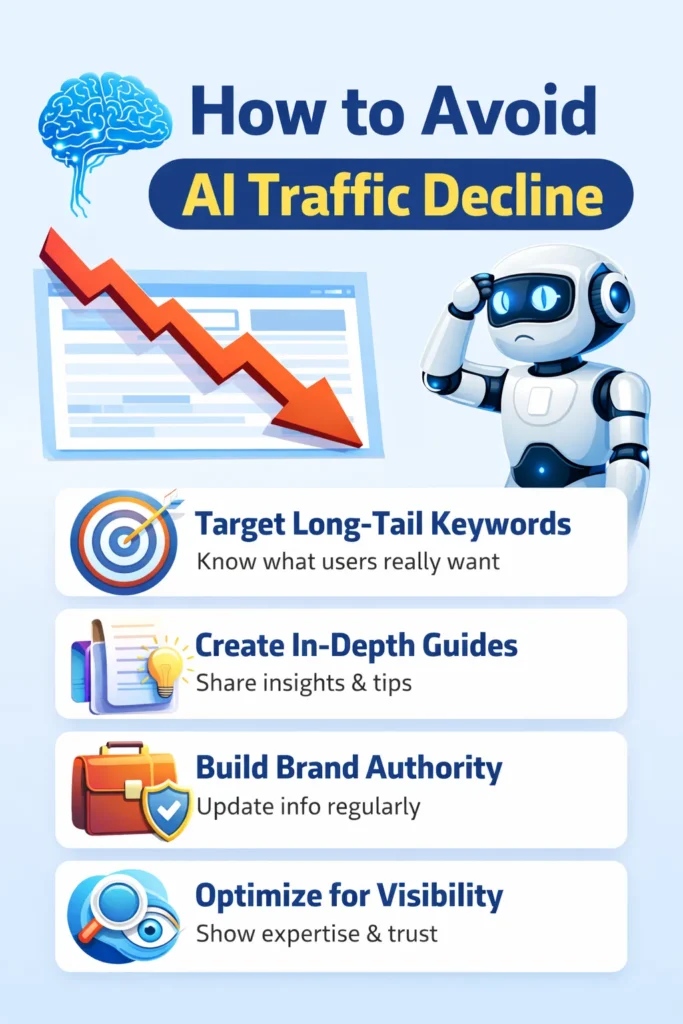
1. Target Long-Tail Keywords
Instead of generic topics, focus on detailed queries.
2. Create In-Depth Guides
AI summaries are short. If we create detailed content, users will still click to learn more.
3. Build Brand Authority
When people trust your brand, they search for you directly.
4. Optimize for Visibility, Not Just Clicks
Even if AI shows part of your content, your brand name appears. This builds recognition.
Smart AI SEO Optimization is about adapting, not fighting AI.
Final Thoughts
AI search is not the future. It is the present.
If you and I want our website to grow in 2026, we must focus on:
- AI SEO Optimization
- AEO and GEO strategies
- Schema and structured data
- FAQ blocks
- Clear and simple answers
Instead of fearing AI traffic decline, we should optimize for AI visibility.
When we create helpful, structured, and user-focused content, AI will trust our website — and that means more growth, more visibility, and better rankings.
Now it’s your turn.
Are you ready to upgrade your SEO strategy with AI SEO Optimization? 🚀
Read Also : Beginner’s guide to Digital Marketing
Watch now : Ai SEO Optimization
Leave a Reply